About the product
A removable mesh pool fence you can take down.
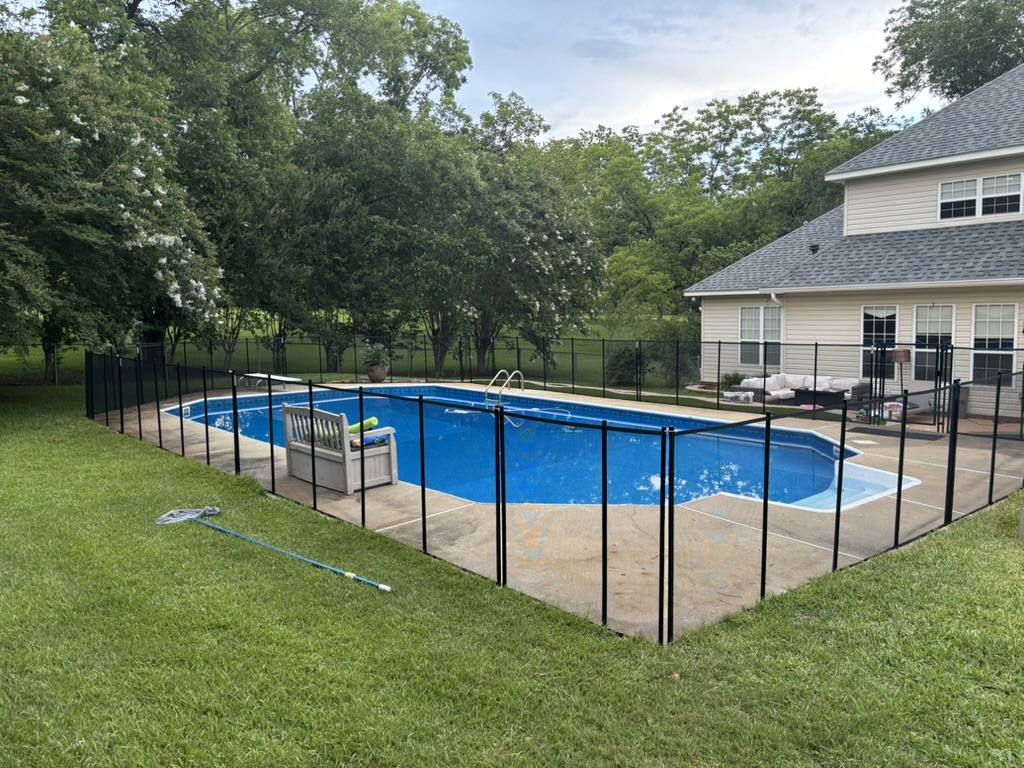
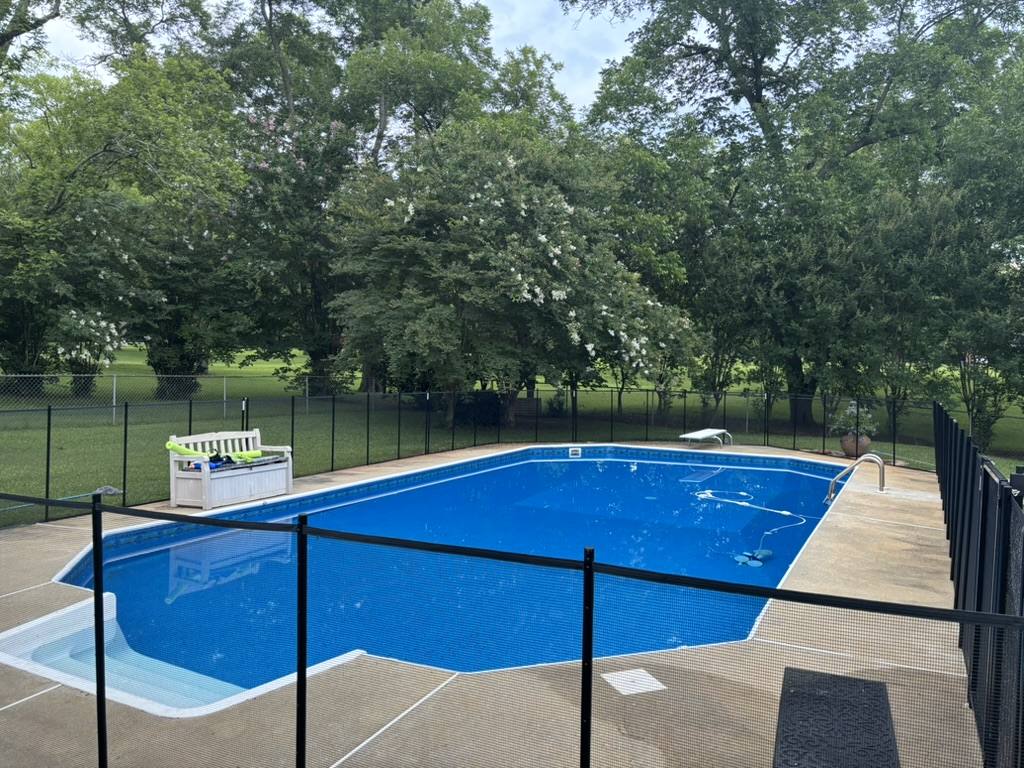
A Baby Guard fence is a removable mesh barrier made for swimming pools. It is there so a child cannot walk from the house or the yard into the water, and it comes down when adults want the deck open.
Gulf Coast BabyGuard installs it in these featured areas: Pensacola and the Florida Gulf Coast (home base); Baldwin County, AL; Montgomery, AL; Southern Mississippi. We also serve all of Alabama, especially South Alabama, and Texas. The notes below are our own explanation of the product. Baby Guard is a brand name. We are an independent installer, not the factory.
Specs
Pole spacing is the same on every fence we install. Mesh and pole colors are the ones Baby Guard lists on its pool fence page.
| Pole spacing | 36 inches apart on every Baby Guard fence |
|---|---|
| Clear View mesh | Black, beige, brown, blue, and white |
| Standard mesh | Black only |
| Poles | Black, white, beige, and brushed aluminum |
| Pin poles | Black, brown, beige, and brushed aluminum, where that style is offered |
Color options
These are the mesh and pole colors named on Baby Guard's pool fence page, babyguardfence.com/pool-fences. Nothing was added that the page does not list.
- Premium Clear View mesh: black, beige, brown, blue, and white.
- Standard mesh: black only.
- XT7000 poles: black, white, beige, and brushed aluminum.
- Pin poles, in markets where they are offered: black, brown, beige, and brushed aluminum.
On some of these options the mesh and the trim do not have to be the same color. You can mix and match: one mesh color with a different trim color. The beige-trim sample below is brown mesh with beige trim.
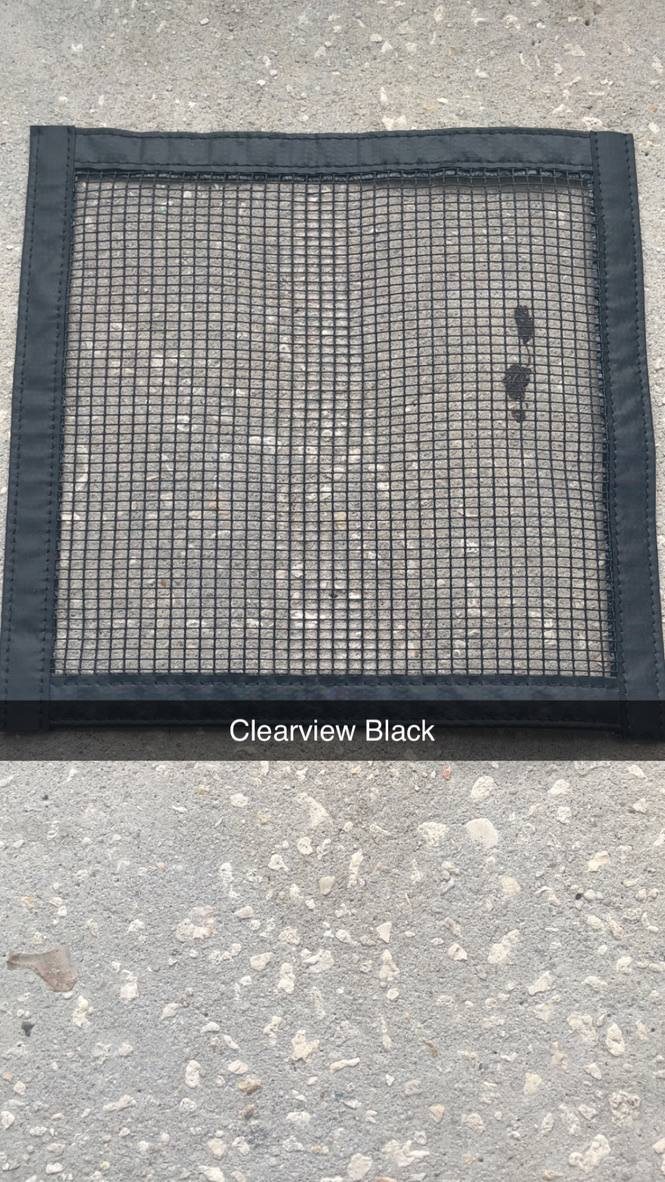
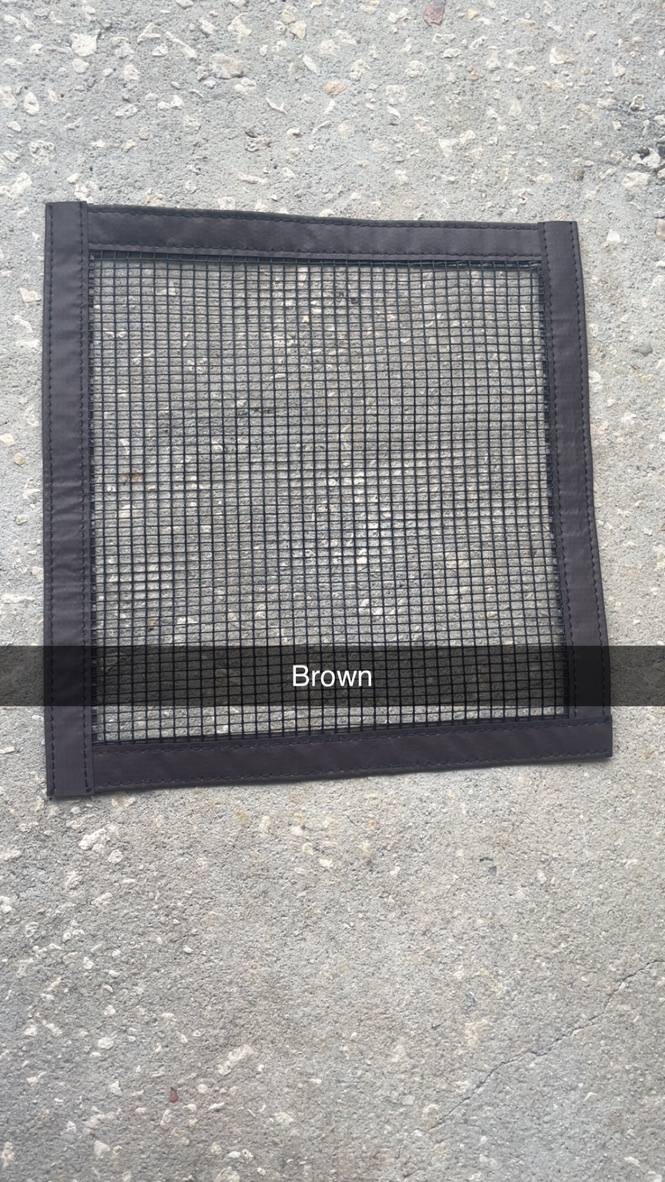
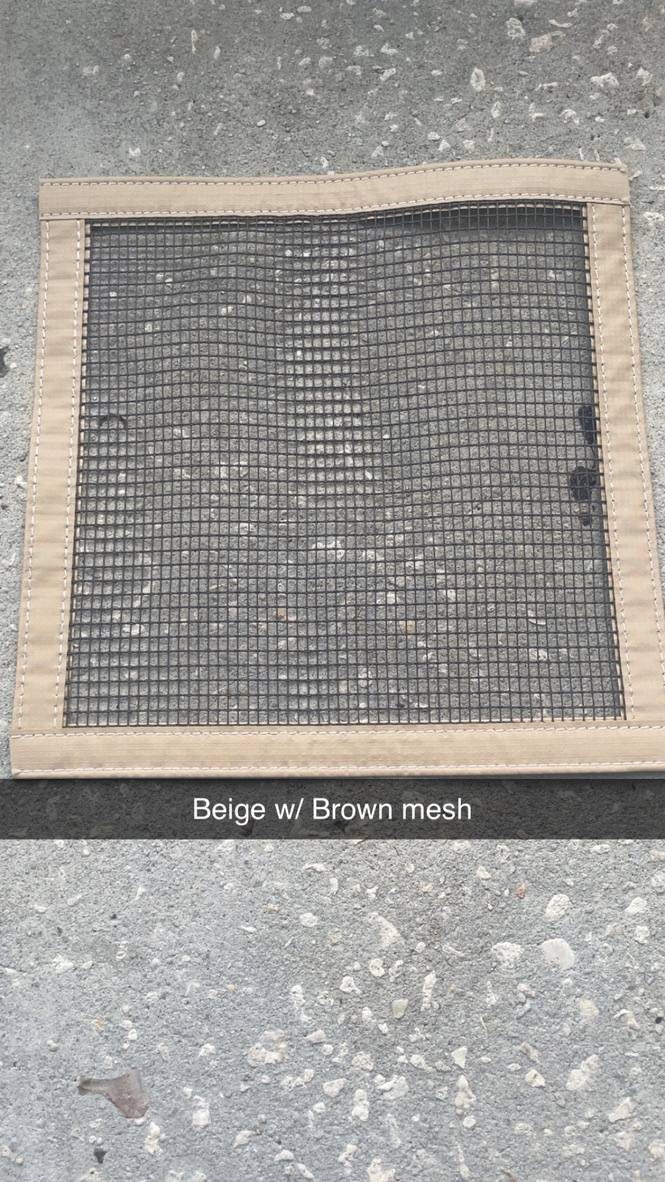
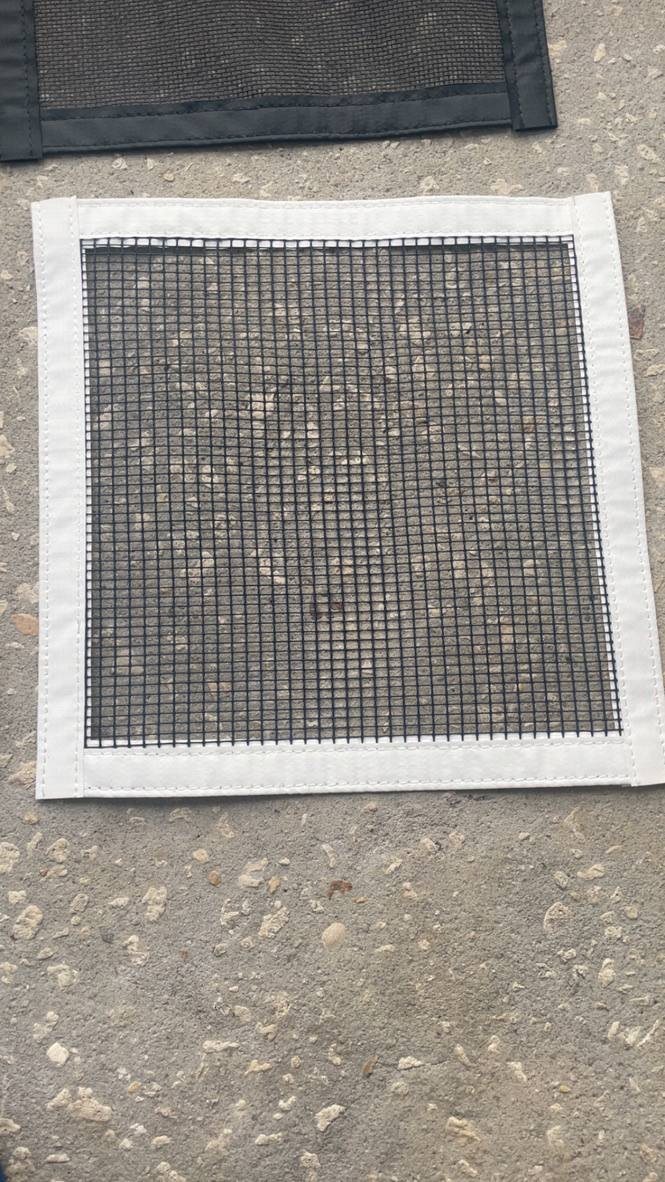
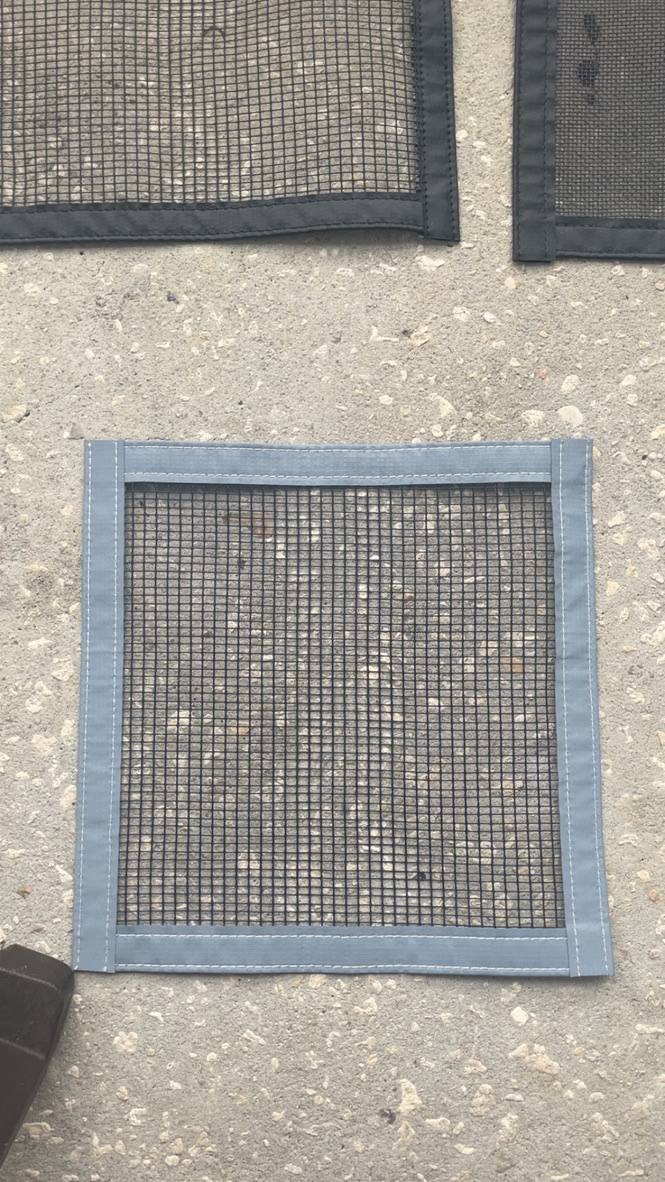
Samples are our own photos, not factory images. Source for the color names: Baby Guard pool fences page, checked November 2026.
Materials
The fence is mesh stretched between slim poles. The clearer mesh is knotted, which helps it hold its shape instead of stretching into a sag. A standard black woven mesh is the simpler, tougher option a lot of builders still ask for. On every fence we install, the poles sit 36 inches apart.
The newer poles are reinforced down the length. In some markets a thinner pin-style pole is available, which means a smaller hole in the deck. We will tell you which of those we can get here. Colors are listed above.
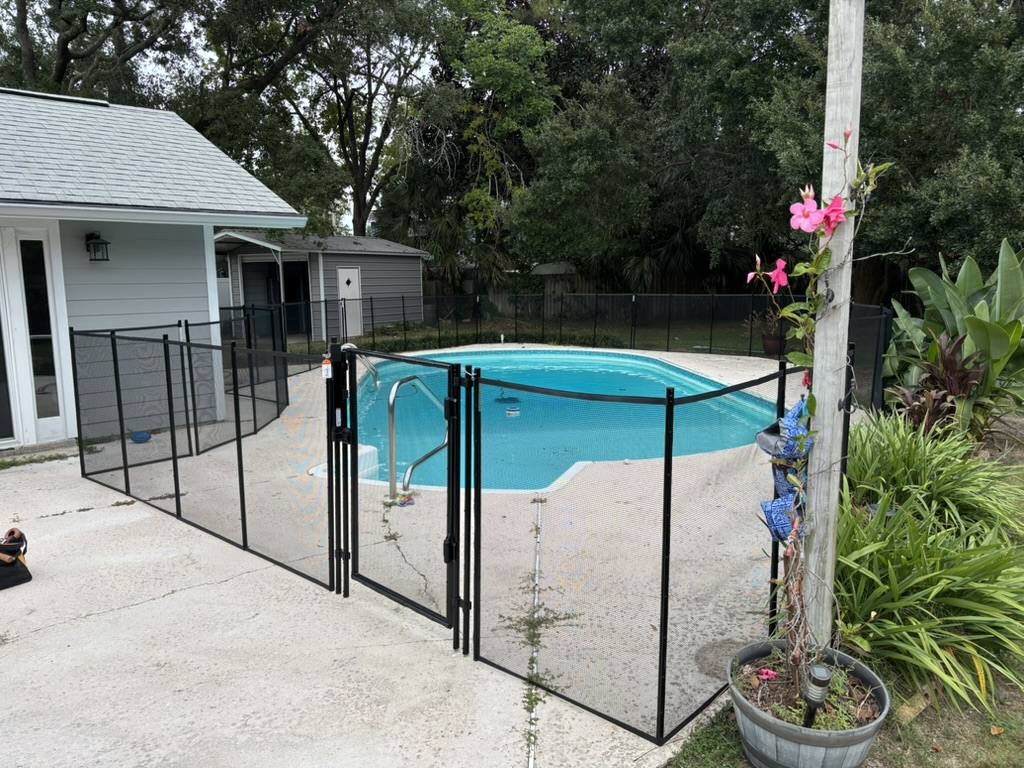
The everyday entry is a self-closing, self-latching gate. The latch sits up high, out of a small child's reach, and it can be locked with a key. The gate's support is built so you do not have to re-tune it every time the fence comes down and goes back up. A manual access panel is the other opening: a section you unhook and park in an extra sleeve to make a wider gap for furniture. That panel does not close itself. If you open it, you close it before anyone is left alone near the water.
How it goes in
We walk the pool with you and mark where the fence should sit: far enough from the water to be useful, tight enough that a child cannot slip around an end. Sleeves are drilled into the deck and the poles drop into them, 36 inches apart, on every Baby Guard fence. Mesh sections are cut for your pool, so a kidney, a square, or a freeform edge all get their own layout. A typical residential job takes a few hours. Only an authorized installer should put a new one in. A fence that looks fine but is loose at the gate, or short at a climbable chair, is worse than no fence, because it feels safer than it is.
When the fence is stored, caps press into the open sleeves. They come in a few deck colors so the holes disappear.
Taking it down, and putting it back
Remove
- An adult opens the gate if you need the room, then works one section at a time.
- Lift each pole out of its sleeve. The mesh stays attached to its poles, so a section comes out as one piece.
- Roll that section, strap it, and store it out of the way. Shade is kinder to the mesh than a bare south wall.
- Press a deck cap into every open sleeve before anyone walks the deck.
Put it back
- Pull the caps.
- Set each section back in the opening it came from. The mesh was cut for those spans, so the order matters.
- Seat every pole all the way down. Hang the gate on its supports. It should close and catch without a new adjustment.
- Walk the line. Look for a pole that is not seated, a sag onto the deck, or a latch that does not catch. Do this before kids are back outside.
Care
Salt air, pollen, and pool splash are the whole job. Hose the mesh and poles. If they look grimy, mild soap and a soft brush are enough. Do not soak the fence in bleach, and do not hit the mesh with a pressure washer. That is how mesh gets fuzzy and weak.
About once a month, a drop of light lubricant on the latch keeps it from sticking. Wipe what runs onto the deck so it does not stain. Once a month, and after a storm, look for torn mesh, a bent pole, a sleeve that has worked loose, and a gate that no longer closes on its own. Call us before the next swim day if any of that shows up. We can reset a fence that wind has pulled, and we can replace a panel. The limited manufacturer warranty covers defects, not a hurricane and not a pole that was used as a ladder.
What it does for safety
The mesh lets you supervise. You can see the pool. Adults get in through a gate they can operate and a small child cannot. When you want the yard open for a party, the fence rolls up. It goes back up before the house is full of kids again.
Isolation fencing, the kind that stands between the house and the water, is the point. A fence on the property line does not stop a child who is already in the backyard. We will say so on the quote visit if the layout you have in mind leaves a gap.
Questions we hear at the kitchen table
How long does installation take?
Most backyard pools are finished in a few hours, often the same day we start. A long run, a seawall, or a deck that needs extra care takes longer. We will tell you the realistic window when we measure.
Do you drill the deck?
Yes. Each pole sits in a sleeve set into the concrete or paver deck. When the fence is stored, a color-matched cap covers the sleeve so the deck is flat and nobody trips on an open hole.
Can I take the fence down myself?
Yes. An adult lifts the poles, rolls the mesh, and caps the sleeves. No tools for a normal takedown. A typical backyard is often down in about fifteen minutes.
Do I have to remove the fence to swim?
No. Day-to-day entry is through the self-closing, self-latching gate. Wider manual openings are for moving furniture or opening the deck for a party. Those openings go back up before the pool is left alone.
Will it work on pavers, wood, or a seawall?
Often, yes. The sleeve detail changes with the surface. We look at the deck on the quote visit and tell you straight if a spot needs a different approach.
How tall is it, and will it pass inspection?
Sections sit in the four-to-five-foot range safety groups recommend for a pool barrier. The mesh system is built to ASTM F2286, the specification for removable mesh pool fences. Your city or county still makes the final call. We install with that inspection in mind.
What maintenance does it need?
Rinse off salt, pollen, and pool splash. Use a mild soap when the mesh looks grimy. Skip bleach and skip a pressure washer on the mesh. Put a drop of light lubricant on the latch about once a month and wipe the extra off the deck. Walk the fence once a month, and again after every tropical storm.
Do you install fences besides the mesh?
Yes. Aluminum picket fences and wood privacy fences are on their own page. Baby Guard mesh is still the specialty.
What does the warranty cover?
The manufacturer offers a limited warranty on defective materials and on installation that was done wrong. Storm damage and misuse are not the same thing as a defect. Ask us for the current warranty sheet before you buy, and call us if a latch, pole, or panel stops doing its job.